












When it comes to making an entrance, where do architects look for their inspiration?
For dramatic effect and storytelling, perhaps classic film noir can give us a clue.
Casablanca is rightly considered one of the greatest movies of all time. A true classic of the genre – and a masterclass in a character making their entrance into the narrative. How does the filmmaker communicate what we need to know in a few short seconds that will prove critical in shaping the next 90 minutes?
The movie opens in Rick’s Café, where various characters hint at the nature of its eponymous owner, long before he makes an appearance:
 “Everybody comes to Rick’s”
“I’ve already heard about this cafe. And also about Mr. Rick himself.”
Rick sits at a table in a corner of the café, away from the action. The camera focuses on his hand as he takes a pull on a (nowadays seldom seen) cigarette. His intensity fills the frame - on the table is a chessboard and a glass of his favourite tipple. The simplicity of the scene tells us a great deal about Rick - the story of a man alone, intense and deep in thought. The movie is set during WW2, and yet here is someone in a much more personal battle - playing a game of chess against himself.
As we find out later, he is preoccupied with his own sorrow at the loss of his love, Ilsa, played by the ethereal Ingrid Bergman. This is his secret, and this is what we need to understand.
But the chess game is also a foreshadow of later scenes, where he must fight with himself in making the right moral choice. He must once again forsake Ilsa for a greater good and watch her leave with her husband Victor Lazslo. And we learn all this from one beautiful, simply framed shot. We learn this all this from one beautiful, simply framed shot, and thus, Rick establishes his entrance into the story. By the way, the line ‘Play it again Sam’ was never uttered – but who cares? We are all entranced.
 Extracts from Pevsner by permission of Pevsner Architectural Guides at Yale University Press.
Architects have a similar task to the movie cinematographer and director when they consider the entrance to their buildings. How do they introduce the experiences ahead for the owner or visitor?
Architects endlessly experiment to create iconic entrances – usually they ‘cut their teeth’ and experiment on exceptional homes. The most talented have created not only distinctive and meaningful entrances, but often incorporate other building elements to create drama, scale, and texture. They tell us a story about what to expect and hint at what lies behind the door.
Take two radically different examples of homes by architects CFA Voysey and Richard Meier.
The Orchard, Chorleywood in Hertfordshire was designed and built by Voysey as his own home. Modest compared to the much grander projects for which he is known.
Consider for a moment the beautiful simplicity of the entrance. Its welcoming porch shelters the visitor whilst giving subtle hints of the nature of the spaces that lies beyond. The homely plank door features a heart shaped letter plate echoed by the strap hinges and minimal door knocker. The hallmarks of the modest heart of a designer who has a deep appreciation of the nature of detail. The design of the rooms beyond are as simple and powerful - Voysey designed every element of his houses, being as well known for his textile and furniture as his architecture.
The entrance makes it clear what we are to expect in the house beyond - all the clues are on the door.

By contrast, the entrance to the Smith House in Darien, Connecticut, by American architect Richard Meier, tells a very different story.
The plain unadorned entrance and solid door is approached over a bridge and set into a largely plain wall. It is a deliberate understatement, not of modesty, but of setting the scene for dramatic transformation. The visitor is unprepared for the explosion of geometry, glass, volume, and vista that unfolds with expansive views across the sea. The bridge is a subtle clue, with its deliberately constricted narrow path and open side, echoing a mediaeval moat. The visitor is crossing into a different realm as they realise the entrance is in a suspended middle storey. It is a near perfect exercise in control and trepidation, the opposite of Voysey’s house.
And yet both utilise a simple, solid door with minimal features to communicate the architect’s intention. Simplicity that offers hints at the spaces beyond – both perfect examples of impression management and unfolding narrative.
At this level of detail, door furniture is one of the very few ways to communicate integrity of idea, quality and solidity.

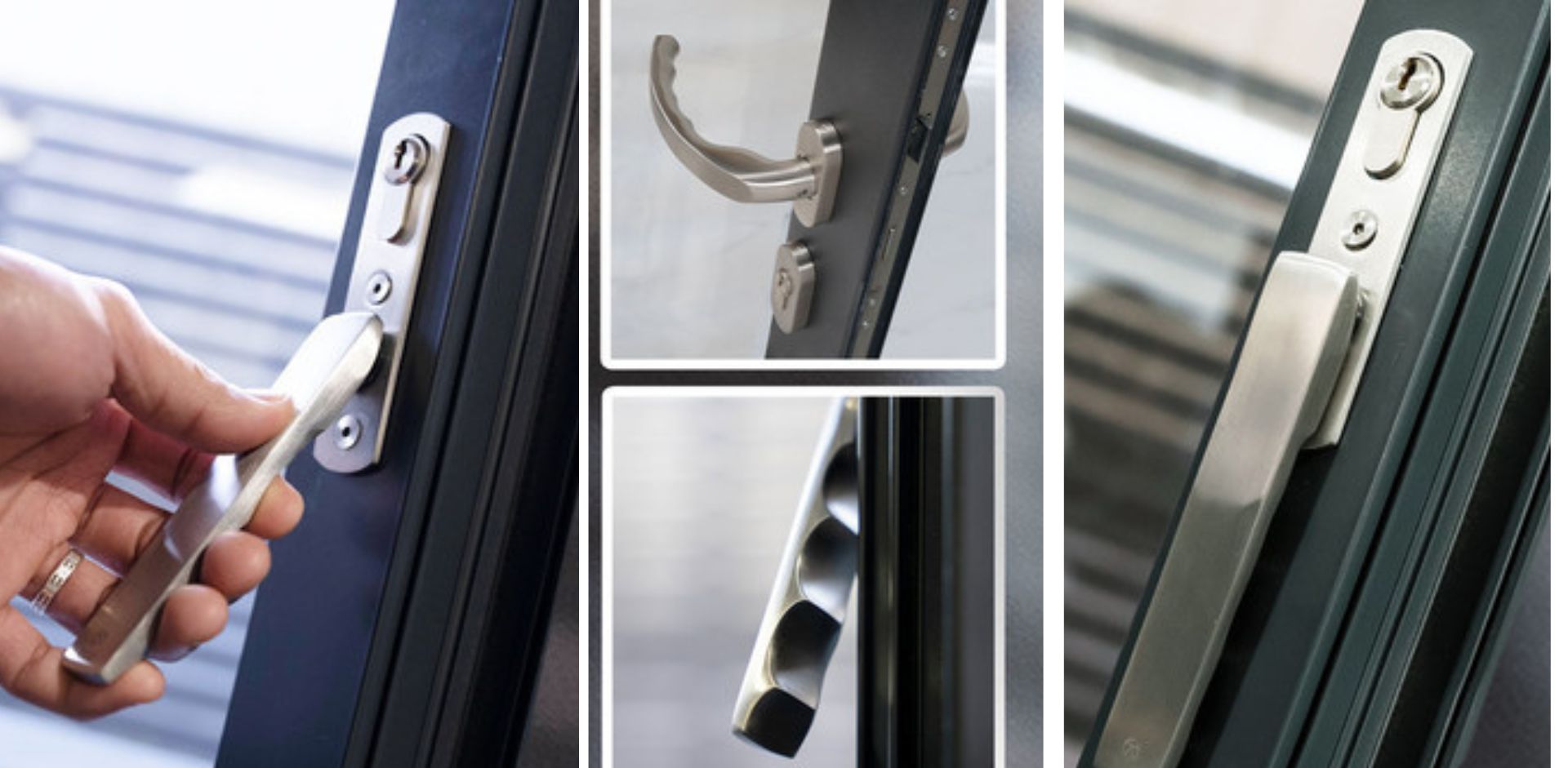
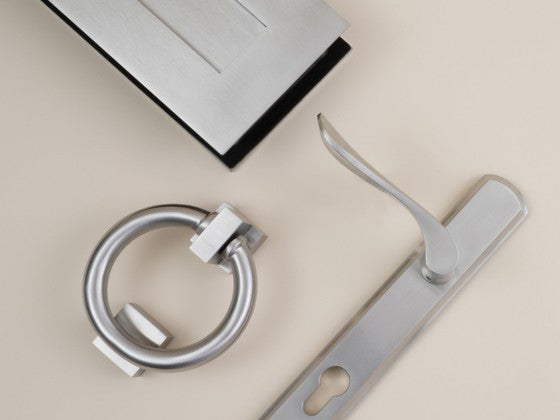
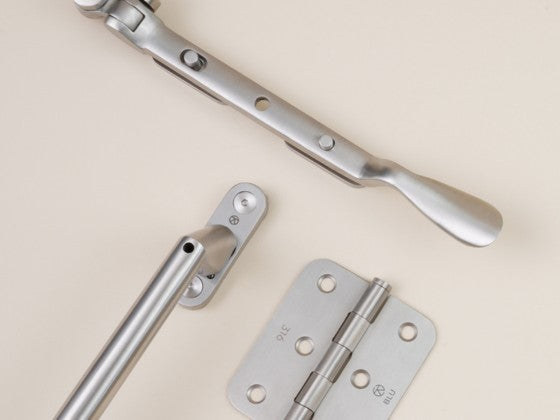
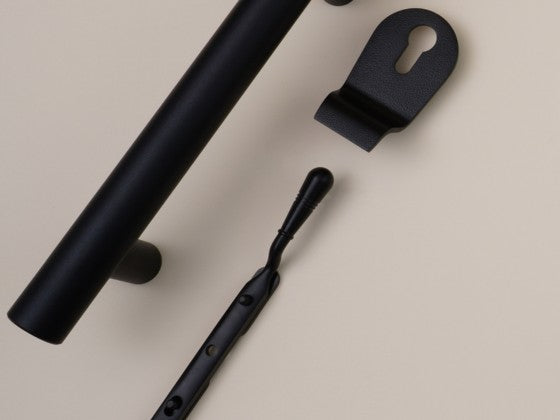
At Coastal, we make it our goal to ensure our ironmongery helps tell the appropriate story desired by the architect and their client. We believe that the quality, robustness, shape of our 316 marine grade stainless steel hardware in a variety of finishes, are essential elements of that opening narrative. Carefully chosen to open the door to the experiences ahead.
We have created a CPD covering key issues when it comes to ‘Making an Entrance’.
See here for more information and to book a presentation.
Whilst you’re these, take a look at our BLU™ Range - You’ll be sure to find the right pieces for your project.
In closing and succinctly capturing the timeless art of making an entrance, we should return to Casablanca and the immortal words of the movie’s most famous song:
“The fundamental things apply,
As time goes by”
Play it again, Sam.